The International Monetary Fund has praised Sri Lanka’s economic recovery, citing better-than-expected growth and stabilising inflation, but has warned that the country must maintain its reform momentum to ensure long-term stability.
Following a two-week mission in Colombo, the IMF announced a staff-level agreement on the fifth review of its $3bn bailout programme, paving the way for a further $347m disbursement, but stressed that continued fiscal discipline and governance reforms were essential to prevent a recurrence of last year’s crippling economic crisis.
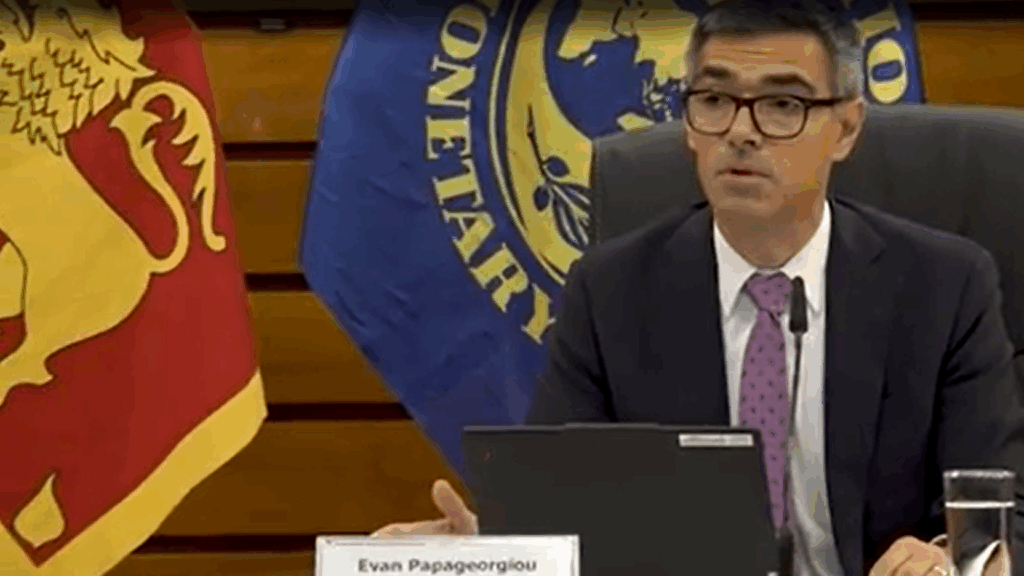
The announcement, made on Thursday by the IMF’s mission chief, Evan Papageorgiou, comes as a welcome boost for a nation still grappling with the aftershocks of its worst financial turmoil since independence.
The Sri Lankan economy, which contracted sharply in 2022, has shown signs of a tentative recovery this year, with the IMF noting that GDP grew by 4.8% in the first half of 2025. Inflation, which had spiralled to unprecedented levels, has been brought under control, and the country’s foreign reserves have been bolstered to $6.1bn.
Strict Conditions Remain
However, the fund was keen to emphasise that the path to a full recovery remains fraught with challenges. The disbursement of the next tranche of financial support is contingent on a series of prior actions, including parliamentary approval of a 2026 budget that adheres to strict fiscal targets, and further progress on debt restructuring with Sri Lanka’s bilateral and private creditors.
The IMF has set a minimum primary fiscal surplus target of 2.3% for 2026, a goal that will require sustained efforts to improve tax collection and curb public spending.
Papageorgiou told reporters that while Sri Lanka’s reform programme was delivering “commendable outcomes”, there was no room for complacency.
“Addressing the debt stock alone is insufficient; fixing the flow that feeds into the debt stock is just as important,” he said, highlighting the need for a new public debt management office to be made operational swiftly.
The IMF also underscored the importance of tackling corruption and strengthening governance, with a particular focus on the Commission to Investigate Allegations of Bribery or Corruption (CIABOC).
Budget Under Scrutiny
The staff-level agreement is a significant milestone for Sri Lanka, but it is not the final hurdle. The agreement will now go before the IMF’s executive board for approval, a process that is expected to take several weeks.
In the meantime, the Sri Lankan government will be under pressure to deliver on its reform commitments, particularly with regard to the 2026 budget. The IMF will be watching closely to ensure that the budget includes strong revenue-raising measures and avoids a return to the unsustainable spending habits of the past.
One of the key drivers of Sri Lanka’s improved fiscal performance this year has been a surge in tax revenue from motor vehicle imports. However, the IMF has expressed caution about the sustainability of this revenue stream, noting that it may be a temporary phenomenon driven by pent-up demand.
The fund has urged the government to focus on broadening the tax base and improving tax compliance to ensure a more stable source of revenue in the long term.
State Enterprise Overhaul Demanded
The issue of state-owned enterprises (SOEs) also remains a major concern for the IMF. The fund has called for continued reforms to ensure that SOEs are financially viable and do not pose a risk to the government’s budget.
The unbundling of the Ceylon Electricity Board (CEB) is seen as a crucial test of the government’s commitment to SOE reform, and the IMF will be closely monitoring developments in this area. Cost-reflective energy pricing is another key structural benchmark that the fund will be looking for.
On the monetary policy front, the IMF has urged the Central Bank of Sri Lanka to remain data-driven and to safeguard its independence. The fund has also warned against any monetary financing of the budget, a practice that has contributed to Sri Lanka’s economic woes in the past.
The government’s commitment to these principles will be crucial in maintaining price stability and rebuilding confidence in the Sri Lankan economy.
A Difficult Path Forward
The road ahead for Sri Lanka is likely to be a long and challenging one. The country’s debt burden remains substantial, and the government will need to navigate a complex debt restructuring process with its creditors. The Eurobond exchange was completed in December 2024, and bilateral agreements have been signed with partners like Japan and India. However, about half a billion dollars of external debt still needs to be restructured.
The success of Sri Lanka’s reform programme will ultimately depend on the government’s ability to maintain its political will and to implement difficult but necessary reforms.
The IMF’s continued support will be crucial in this regard, but the fund has made it clear that its assistance is conditional on a sustained commitment to fiscal discipline, debt sustainability, and good governance. The coming months will be a critical test of Sri Lanka’s resolve to put its economy back on a sustainable path. The international community will be watching closely, hoping that the island nation can finally turn the page on a painful chapter in its history.