Author: Editor LankaMarketPulse

  • Sri Lankan Bourse Sees Domestic Titans Reign as Foreign Capital Flees

    The Colombo Stock Exchange (CSE) was a tale of two markets last week, as a colossal Rs. 37 billion turnover driven by domestic titans was starkly contrasted by a massive withdrawal of foreign capital. A blockbuster acquisition in the consumer foods sector kept the market buzzing, but the accelerated flight of international investors has painted a troubling picture for the island nation’s financial landscape.

    The week ending October 17, 2025, saw the market sustain its “decade-high trading frenzy,” propelled almost exclusively by local institutional investors whose enormous block trades dictated the market’s bullish direction.

    Big Money Goes Bigger as Domestic Dominance Intensifies

    Total equity turnover for the week held firm at a staggering Rs. 37.22 billion, but the underlying composition shifted dramatically. Domestic players were not just in the driver’s seat; they owned the entire road. Domestic trading accounted for an overwhelming 96% of the total turnover, with transactions worth Rs. 35.89 billion.

    This torrent of local capital continued to be channelled through vast, block-sized trades. Significant crossing transactions—large, negotiated trades made off the regular trading board—were a daily feature, with major deals seen in Tokyo Cement, DFCC Bank, and Hemas Holdings.

    While the monetary value remained concentrated, the number of trades increased to over 204,000 from the previous week’s 174,419, suggesting a broadening of market engagement even as the market’s direction is set by a handful of domestic heavyweights.

    Hayleys’ Blockbuster Deal Sends Harischandra Shares to Stratospheric Highs

    The week’s headline event was the dramatic acquisition of a controlling stake in the legacy food manufacturer, Harischandra Mills PLC, by the diversified conglomerate Hayleys PLC. The deal, which saw Hayleys purchase 40.58% of Harischandra from Senthilvel Holdings (Pvt) Limited, was valued at over Rs. 2.57 billion.

    The transaction, executed at Rs. 3,300 per share, had an immediate and explosive impact on Harischandra’s stock price. The share, which closed the previous week at Rs. 2,600, not only closed at Rs. 5,850 but hit a stratospheric intra-week high of Rs. 7,424.50, marking an extraordinary 125% gain on its closing price. This single corporate action highlighted how strategic domestic moves are fuelling the current market climate.

    Market Indices Climb as Foreign Investors Run for the Exits

    Supported by the high-value domestic activity, the benchmark All Share Price Index (ASPI) continued its upward trajectory. The index gained 315.08 points during the week, a 1.4% increase, to close at 22,633.80. This pushes the ASPI’s year-to-date gain to an impressive 41.95%.

    However, this domestic optimism was met with a brutal verdict from foreign investors. The trend of foreign capital outflows intensified dramatically, with a net withdrawal of Rs. 3.14 billion for the week. This massive capital flight reverses any recent glimmers of international confidence and suggests a deep-seated caution among foreign players about the Sri Lankan market’s stability.

    Sector Movers and Shakers

    The market’s gains were not uniform, with specific sectors showing significant volatility. The Diversified Financials sector was a hotbed of activity, with Merchant Bank (+93.33%) and Sarvodaya Development Finance (+71.36%) joining Harischandra among the week’s top performers. The Food & Staples Retailing and Real Estate sectors also recorded strong index growth.

    On the other end of the spectrum, the Utilities and Capital Goods sectors faced headwinds. Panasian Power was the week’s biggest loser, shedding 12.23% of its value. It was followed by capital goods firms Luminex (-9.33%) and Kelani Cables (-9.07%), indicating that investor enthusiasm was not universal across the market.

    Sanctions Cast Shadow Over LAUGFS Gas

    Adding a layer of geopolitical risk to the market’s dynamics, LAUGFS Gas PLC announced that its Dubai-based subsidiary, SLOGAL Energy DMCC, was suspending operations. The move came after the subsidiary was hit by sanctions from the U.S. Treasury over alleged links to the trade of Iranian liquified petroleum gas.

    The news introduced significant volatility for the energy company’s stock, underscoring how external geopolitical events can have rapid and unpredictable impacts on specific equities, irrespective of the broader domestic market trends. While the stock showed a slight gain for the week, the long-term implications of the sanctions remain a key concern for investors.

    The week’s trading activity paints a picture of a market brimming with local confidence but increasingly isolated, as the chasm between bullish domestic sentiment and fleeing foreign capital grows ever wider.
  • LAUGFS Halts Subsidiary Operations After US Sanctions Over Iran LPG Trade Links

    Following sanctions from the United States Treasury Department, Sri Lankan energy firm LAUGFS Gas PLC has suspended its Dubai-based subsidiary, SLOGAL Energy DMCC.

    The company announced its decision, which relates to the subsidiary’s alleged involvement in trading Iranian LPG, in a corporate disclosure to the Colombo Stock Exchange.

    Immediate Suspension

    The Board of Directors at LAUGFS resolved to immediately suspend all SLOGAL’s commercial operations, and the subsidiary committed to ceasing any trade involving sanctioned entities.

    This swift decision follows the U.S. Treasury’s placement of SLOGAL on its Specially Designated Nationals (SDN) list, a designation that was officially announced on October 9th.

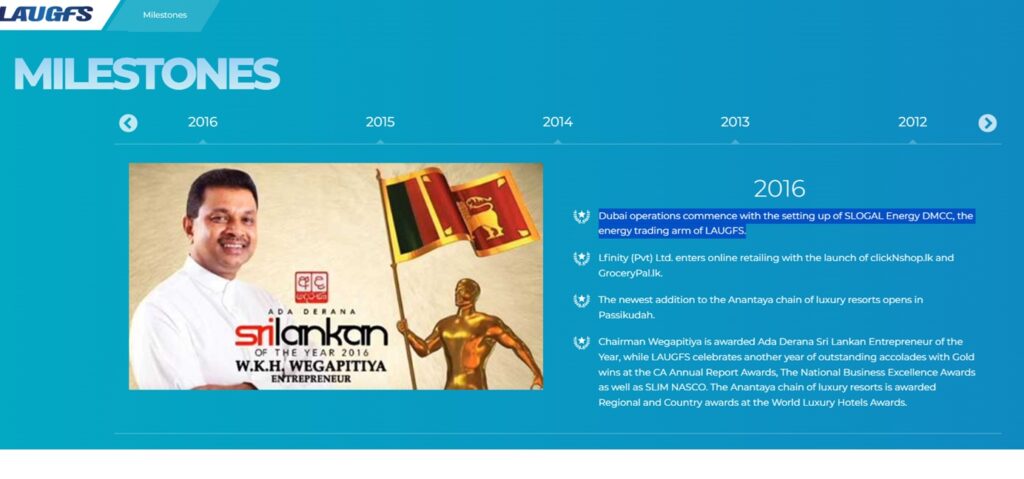
    LAUGFS Gas PLC website on commencement of SLOGAL Energy DMCC operations in Dubai in 2016.

    Legal Challenge Mounted

    LAUGFS has now initiated an independent legal and compliance review led by recognized U.S. sanctions counsel, with the primary objective of petitioning for SLOGAL’s delisting.

    The company asserted that all past commercial transactions complied with international trade practices and were supported by documentation verifying legitimate supply sources.

    Domestic Supply Unaffected

    The parent company has assured stakeholders that this recent development will not impact its core local business, confirming domestic LPG sales and distribution remain fully operational.

    SLOGAL primarily functioned as an international trading arm for re-export operations, meaning core services within Sri Lanka will continue without any significant interruption.

    Alleged Links to Iranian Trade

    According to an October 12 report by The Sunday Times, the U.S. Treasury designated SLOGAL for its role as a “key player” in trading Iranian LPG. The Treasury stated SLOGAL was used by other entities to help facilitate the sale, shipment, and export of millions of dollars’ worth of Iranian LPG. These shipments allegedly involved multiple international destinations, including the countries of Sri Lanka and Yemen, according to the U.S. press release. SLOGAL Energy was previously the second-largest contributor to group revenue, experiencing exponential growth in markets like Bangladesh and the Maldives.

  • Sri Lanka’s Bailout Continues with Strict IMF Demands on Debt and Governance

    The International Monetary Fund has praised Sri Lanka’s economic recovery, citing better-than-expected growth and stabilising inflation, but has warned that the country must maintain its reform momentum to ensure long-term stability.

    Following a two-week mission in Colombo, the IMF announced a staff-level agreement on the fifth review of its $3bn bailout programme, paving the way for a further $347m disbursement, but stressed that continued fiscal discipline and governance reforms were essential to prevent a recurrence of last year’s crippling economic crisis.

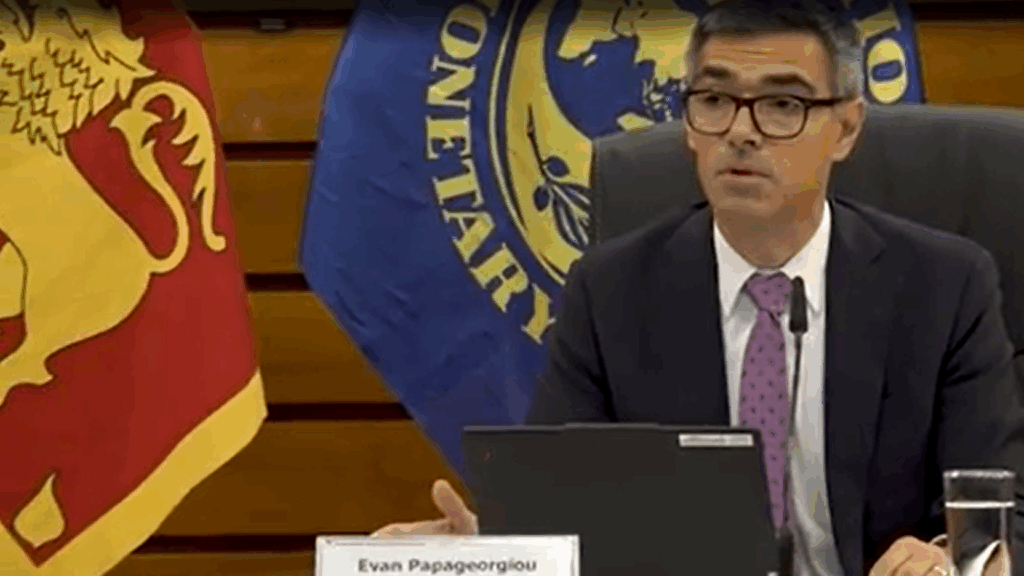
    The announcement, made on Thursday by the IMF’s mission chief, Evan Papageorgiou, comes as a welcome boost for a nation still grappling with the aftershocks of its worst financial turmoil since independence.

    The Sri Lankan economy, which contracted sharply in 2022, has shown signs of a tentative recovery this year, with the IMF noting that GDP grew by 4.8% in the first half of 2025. Inflation, which had spiralled to unprecedented levels, has been brought under control, and the country’s foreign reserves have been bolstered to $6.1bn.

    Strict Conditions Remain

    However, the fund was keen to emphasise that the path to a full recovery remains fraught with challenges. The disbursement of the next tranche of financial support is contingent on a series of prior actions, including parliamentary approval of a 2026 budget that adheres to strict fiscal targets, and further progress on debt restructuring with Sri Lanka’s bilateral and private creditors.

    The IMF has set a minimum primary fiscal surplus target of 2.3% for 2026, a goal that will require sustained efforts to improve tax collection and curb public spending.

    Papageorgiou told reporters that while Sri Lanka’s reform programme was delivering “commendable outcomes”, there was no room for complacency.

    “Addressing the debt stock alone is insufficient; fixing the flow that feeds into the debt stock is just as important,” he said, highlighting the need for a new public debt management office to be made operational swiftly.

    The IMF also underscored the importance of tackling corruption and strengthening governance, with a particular focus on the Commission to Investigate Allegations of Bribery or Corruption (CIABOC).

    Budget Under Scrutiny

    The staff-level agreement is a significant milestone for Sri Lanka, but it is not the final hurdle. The agreement will now go before the IMF’s executive board for approval, a process that is expected to take several weeks.

    In the meantime, the Sri Lankan government will be under pressure to deliver on its reform commitments, particularly with regard to the 2026 budget. The IMF will be watching closely to ensure that the budget includes strong revenue-raising measures and avoids a return to the unsustainable spending habits of the past.

    One of the key drivers of Sri Lanka’s improved fiscal performance this year has been a surge in tax revenue from motor vehicle imports. However, the IMF has expressed caution about the sustainability of this revenue stream, noting that it may be a temporary phenomenon driven by pent-up demand.

    The fund has urged the government to focus on broadening the tax base and improving tax compliance to ensure a more stable source of revenue in the long term.

    State Enterprise Overhaul Demanded

    The issue of state-owned enterprises (SOEs) also remains a major concern for the IMF. The fund has called for continued reforms to ensure that SOEs are financially viable and do not pose a risk to the government’s budget.

    The unbundling of the Ceylon Electricity Board (CEB) is seen as a crucial test of the government’s commitment to SOE reform, and the IMF will be closely monitoring developments in this area. Cost-reflective energy pricing is another key structural benchmark that the fund will be looking for.

    On the monetary policy front, the IMF has urged the Central Bank of Sri Lanka to remain data-driven and to safeguard its independence. The fund has also warned against any monetary financing of the budget, a practice that has contributed to Sri Lanka’s economic woes in the past.

    The government’s commitment to these principles will be crucial in maintaining price stability and rebuilding confidence in the Sri Lankan economy.

    A Difficult Path Forward

    The road ahead for Sri Lanka is likely to be a long and challenging one. The country’s debt burden remains substantial, and the government will need to navigate a complex debt restructuring process with its creditors. The Eurobond exchange was completed in December 2024, and bilateral agreements have been signed with partners like Japan and India. However, about half a billion dollars of external debt still needs to be restructured.

    The success of Sri Lanka’s reform programme will ultimately depend on the government’s ability to maintain its political will and to implement difficult but necessary reforms.

    The IMF’s continued support will be crucial in this regard, but the fund has made it clear that its assistance is conditional on a sustained commitment to fiscal discipline, debt sustainability, and good governance. The coming months will be a critical test of Sri Lanka’s resolve to put its economy back on a sustainable path. The international community will be watching closely, hoping that the island nation can finally turn the page on a painful chapter in its history.

  • Colombo Bourse ignites with decade-high trading frenzy as big money plays its hand

    A torrent of capital, channelled through vast, block-sized trades, has sent the Colombo Stock Exchange’s trading volumes to levels not seen in years, masking a market where fewer players are making bigger bets.

    A wave of high-value, institutional-level trading has engulfed the Colombo Stock Exchange, driving weekly share volumes to a decade-high and painting a picture of a market in the grips of a dramatic, high-stakes surge.

    For the week ending 10 October 2025, the total value of equity turnover rocketed to Rs. 37 billion, a substantial leap from the Rs. 33.3 billion recorded the previous week. This spike in activity was not driven by a rush of everyday retail investors, but rather by a series of colossal transactions that suggest a consolidation of power among heavyweight players.

    The headline figures are staggering. The total volume of shares traded nearly doubled, exploding from 1.14 billion in the previous week to an extraordinary 1.89 billion. This level of activity dwarfs the corresponding periods in the last two years, which saw volumes of just 444 million and 374 million respectively, signalling a profound shift in market dynamics.

    The All Share Price Index (ASPI) responded with a steady climb, closing at a new yearly high of 22,318.72, a solid 39.98% gain year-to-date.

    A Market of Paradoxes: More Volume, Fewer Trades

    Beneath this bullish surface lies a curious paradox. While the value and volume of shares traded reached a fever pitch, the actual number of transactions fell. The market recorded 174,419 trades this week, a notable decrease from the 199,936 trades of the week before. This divergence is the week’s defining feature: more money and more shares changed hands through fewer, but significantly larger, deals. The implication is clear – the market’s frenetic energy is being fuelled not by a broad-based public rally, but by institutional investors and high-net-worth individuals moving massive blocks of shares in concentrated bursts.

    The engine room of this activity was overwhelmingly domestic. Sri Lankan investors were responsible for approximately 94.12% of the total equity turnover, with domestic purchases and sales totalling Rs. 34.9 billion and Rs. 34.7 billion respectively.

    However, the foreign investment story is more nuanced. While foreign purchases more than doubled to Rs. 2 billion, foreign sales also climbed sharply to Rs. 2.3 billion, resulting in a net foreign outflow of Rs. 265 million for the week.

    The Institutional Footprint: Giants Move in the Shadows

    Nowhere was this big-money play more apparent than in the week’s ‘Crossings’ – large, negotiated transactions that take place outside the main trading board.

    These crossings were a daily feature, with Commercial Bank emerging as the undisputed titan. On a single day, 9 October, the bank was the subject of four enormous crossings, including two trades of 8 million shares each at Rs. 195, valued at Rs. 1.56 billion apiece. These transactions alone underscore the institutional scale of the week’s activity. Commercial Bank’s dominance was total; it recorded the week’s highest turnover at over Rs. 7 billion and was the single biggest contributor to the ASPI’s weekly gain.

    Financials Fuel the Frenzy

    The surge in volume was intensely focused on a few key sectors. The Diversified Financials sector led the charge, reportedly trading an immense 2.4 billion shares. It is within this sector that the week’s most dramatic individual stock stories unfolded.

    SMB Leasing became the market’s top gainer, with its share price soaring a remarkable 71.43%, while UB Finance jumped 34.48%. This sector’s performance underscores how speculative, high-volume trading defined the week. On the flip side, FC Treasuries experienced the sharpest decline, its value plummeting by 12.37%, illustrating a market driven by specific, stock-level speculation rather than a uniform tide of optimism.

    The week’s trading was also marked by extreme daily volatility, dominated by a colossal spike on Thursday, 9 October, which accounted for nearly half of the entire week’s share volume.

    In conclusion, the week was defined by a deluge of capital, but this was a story written by giants. The decline in the number of trades, coupled with the explosion in crossings, reveals a market being decisively shaped by institutional forces. While the benchmark indices inch upwards, the real story lies in the undercurrents of volatility and the high-stakes game being played by big money.